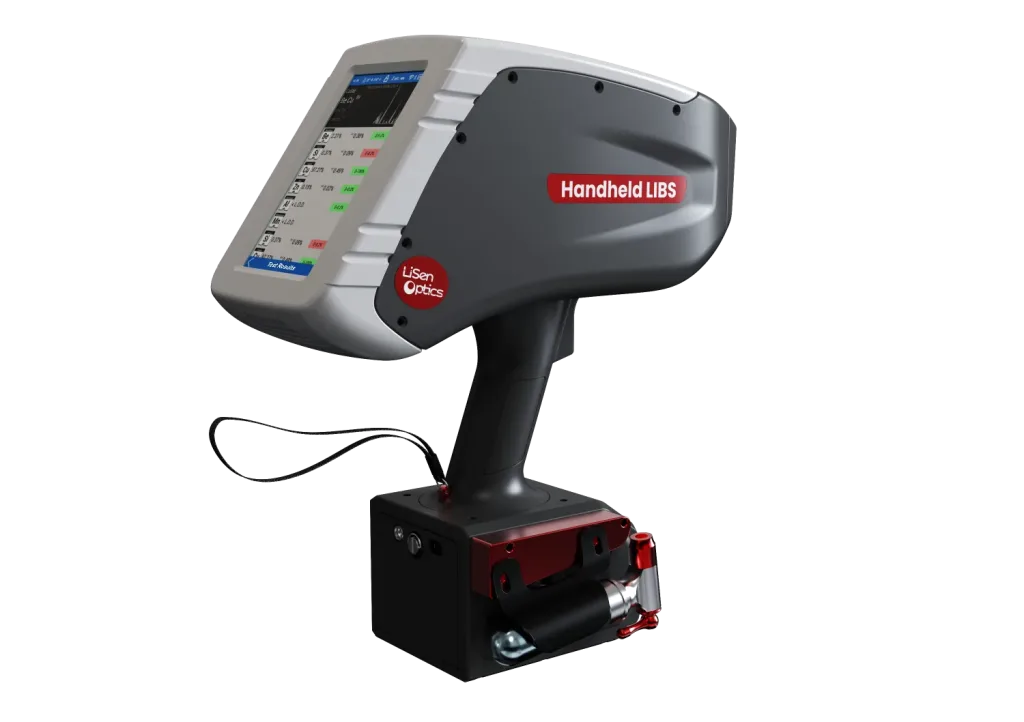
Rapid Carbon Steel Analysis on Site
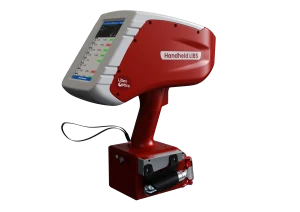
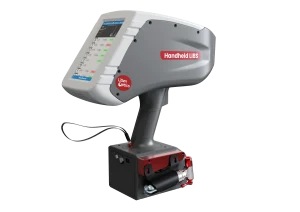
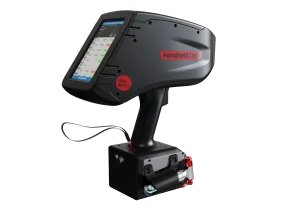
The LiSen Optics iSpecLIBS-HH-C is a handheld LIBS analyzer for rapid grade identification and elemental analysis of carbon steels. Its high-energy 1064 nm laser and optimized optics support qualitative and semiquantitative analysis of key elements, including C, Si, Mn, P, and S, addressing limitations of conventional handheld XRF in light-element analysis.
With minimal sample preparation and results displayed within 3 seconds, the analyzer supports fast decisions on site. AI-assisted carbon-equivalent analysis and an efficient argon recirculation system support field inspection and help control routine operating costs.
Technical Specifications
| Parameter | iSpecLIBS-HH-C |
|---|---|
| Product Image |
 |
| Dimensions | 300 × 300 × 100 mm |
| Weight | 2.7 kg |
| Spectral Range | 200-505 nm |
| Laser | 10 mJ, 1064 nm; Class 3B passively Q-switched solid-state laser |
| Spectrometer | Czerny–Turner optical system with a high-resolution miniature CCD/CMOS detector |
| Spectral Resolution | 0.2-0.28 nm |
| Applicable Materials | Stainless steel, electrical steel, low-alloy steel, and carbon steel |
| Concentration Range | 10 ppm to percentage levels, depending on the element and sample matrix; detection limits can reach the ppm level for selected element–matrix combinations |
| Analysis Time | ≤3 s |
| Stainless steel — Elements | C, Al, Si, Ti, V, Cr, Mn, Ni, Fe, Cu, Nb, Mo, W |
| Low-alloy and carbon steels — Elements | C, Al, Si, Ti, V, Cr, Mn, Fe, Cu, Ni, Nb, Mo, Pb |
| Electrical steel — Elements | Si, Fe, C, S, P, Al, Cr, Mo |
| Grade Libraries | SAE, AISI, ASTM; user-editable |
| Data Formats | CSV, XLSX |
| Report Generation | Supported |
| Analysis Type | Semi-quantitative analysis |
| Grade Classification Accuracy | 80-90% |
| Argon Requirement | Argon required; approximately 200 measurements per cylinder. No vacuum is required. The quick-release optical chamber allows easy cleaning and maintenance |
| Operating Temperature | 0-40 °C |
| Ingress Protection | IP54 |
| Display | 4.3-inch color touchscreen |
| Power | 14.4 V, 3.6 A, 50 W |
| Battery Runtime | Up to 4 hours per battery; four replaceable batteries included |
| Safety Interlocks | Interlocks based on chamber pressure, spectral operating mode, and light/dark sensor status |
| Dual-Camera System | A wide-angle camera captures sample images and measurement-location context, while a macro camera supports laser targeting and detailed inspection of the ablation crater |
| Languages | English and Simplified Chinese |
| Storage and Connectivity | 32 GB, 64 GB, or 128 GB of onboard storage; Bluetooth, USB Type-C, Wi-Fi, and GPS |
| Operating System | Linux |
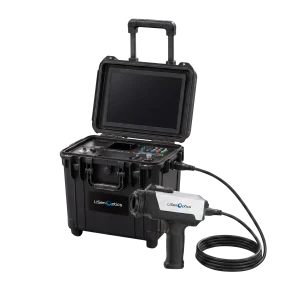
| Standard Package | Carrying case, standard alloy grade library, spare battery pack, laser safety glasses, charger, argon kit, cleaning kit with removable nozzle assembly, and communication cable |
| Calibration and Self-Test | Automatic calibration using alloy reference standards and wavelength-scale verification |
Carbon-Equivalent Analysis and Grade Identification
Dedicated optics and analytical algorithms improve sensitivity to C, Si, P, S, and other light elements. Detection limits can reach the ppm range for supported element and matrix combinations.
AI-assisted modeling calculates carbon equivalent (CE) from the measured composition, helping assess weldability and susceptibility to cold cracking in real time. Built-in carbon steel grade libraries cover GB, ASTM, JIS, and DIN standards and can be edited or expanded by the user.
Argon Use and Field Operation
This model requires argon. Its recirculation system supports approximately 200 measurements per cylinder, reducing gas consumption during high-volume testing. No vacuum is required, and the quick-release optical chamber simplifies cleaning and maintenance.
The analyzer weighs 2.7 kg and has an IP54-rated enclosure for dusty and humid industrial environments. A field-replaceable battery provides up to 4 hours of operation.
Operation and Data Management
The 4.3-inch color touchscreen displays spectra and analytical results. Wide-angle and macro cameras record samples and measurement locations, support laser targeting, and show the ablation crater in detail.
Onboard storage options of 32 GB, 64 GB, and 128 GB support data archiving. CSV and XLSX export, Bluetooth, USB Type-C, Wi-Fi, and GPS support field documentation, remote data transmission, and cloud-based data management.
Applications

Typical Applications
Scrap Metal Recycling
Accurate sorting directly affects the value of recovered materials. The iSpecLIBS-HH-C rapidly identifies carbon steel, low-alloy steel, and stainless steel grades, including 304, 316, and 321, while analyzing key alloying elements such as Ni, Mo, and Cu. Real-time identification improves sorting efficiency, supports the recovery of high-value alloys, and strengthens traceability throughout recycling operations.
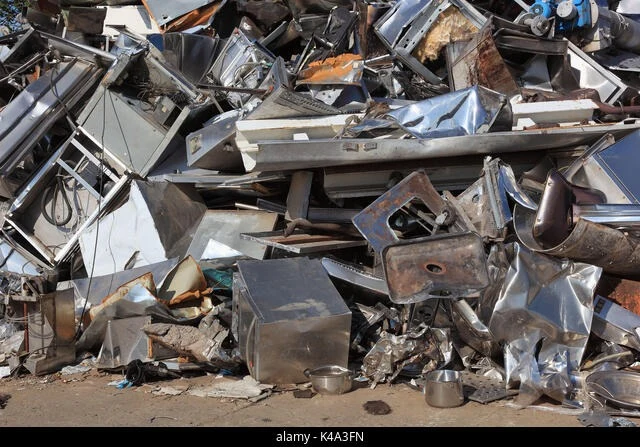
Illustrative image · Alamy
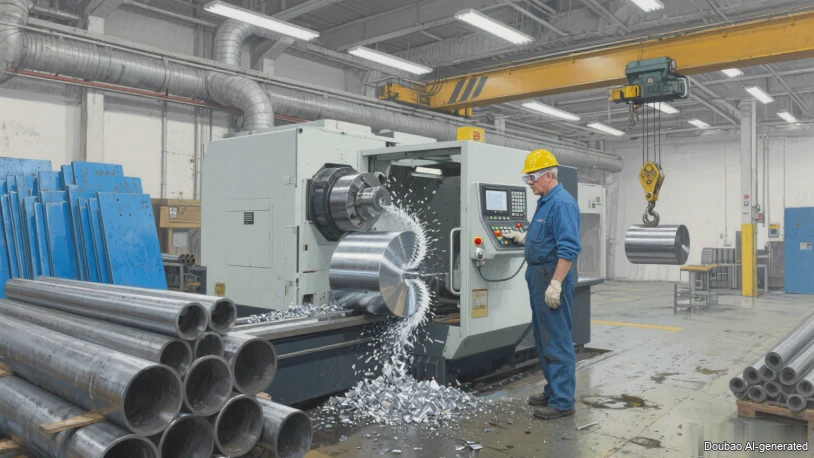
AI-generated illustration
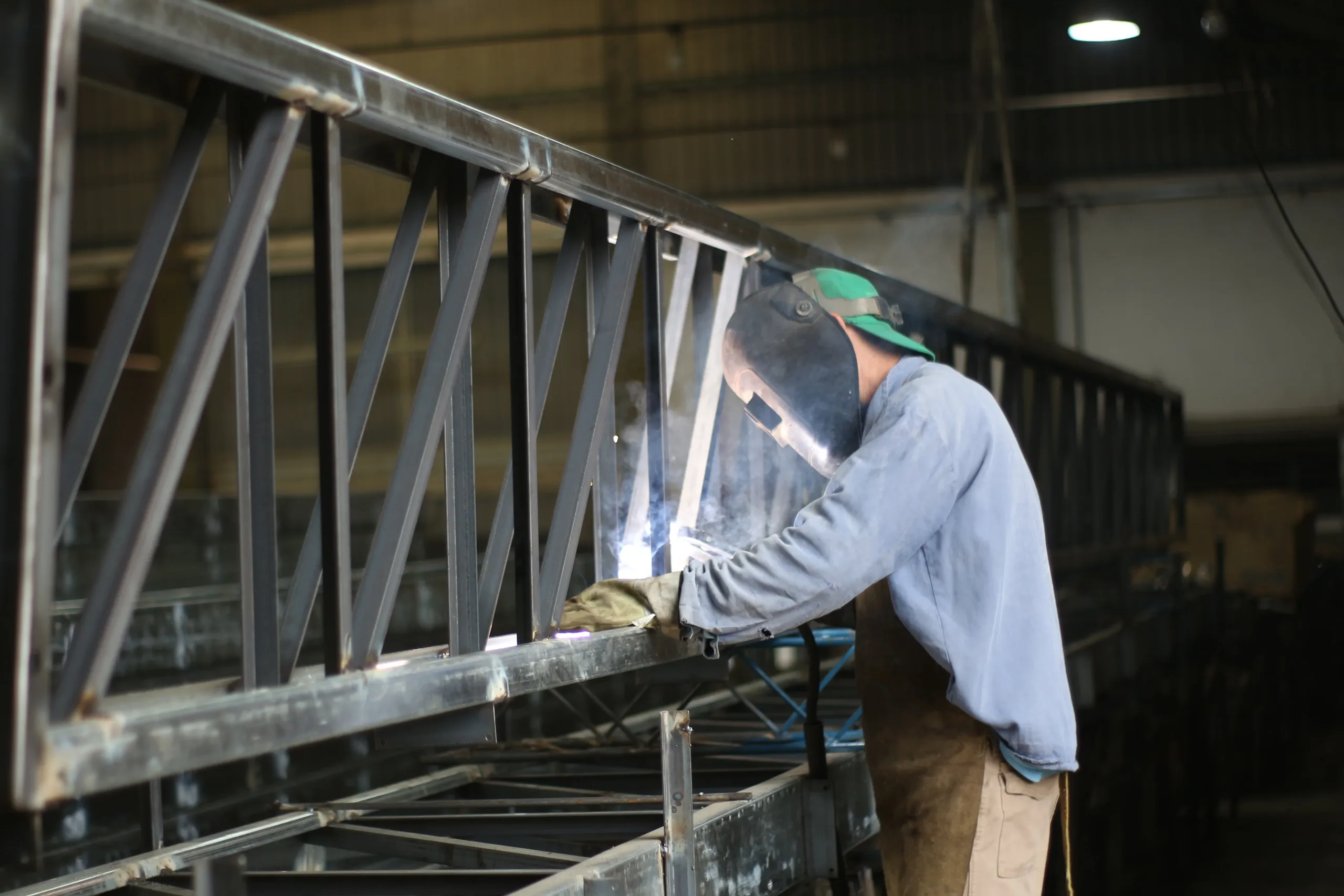
Pipeline Welding
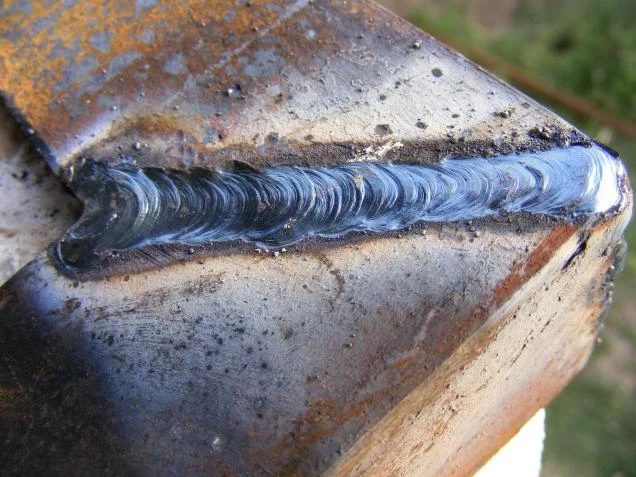
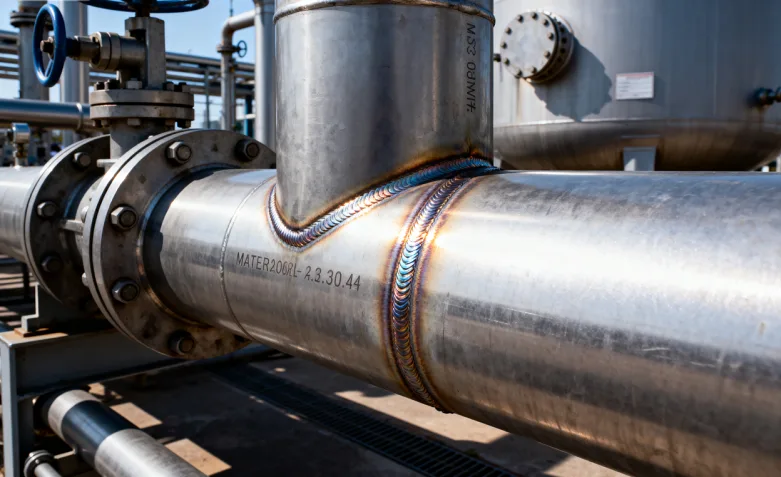
For pipeline welding, pressure vessels, and structural steel fabrication, weld chemistry is critical to joint strength and reliability. The iSpecLIBS-HH-C provides rapid on-site analysis of weld materials. Its software automatically calculates carbon equivalent (CE) to help evaluate weldability and cracking risk.
Real-time measurement of C, Mn, Cr, Mo, V, Cu, Ni, and Si supports faster process verification and improved weld quality control.
Positive Material Identification
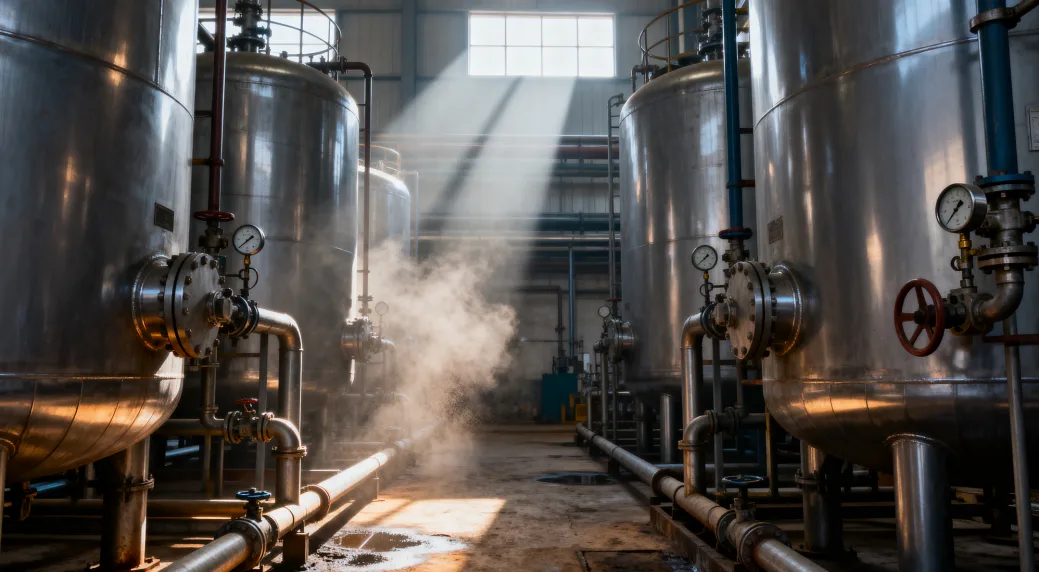
Material verification supports equipment safety and asset integrity in petrochemical, energy, and power industries. The iSpecLIBS-HH-C enables rapid positive material identification (PMI) of pipelines, valves, pressure vessels, and other critical components. Identifying stainless steel and alloy grades helps reduce material mix-ups, while digital records support traceability, quality management, and compliance requirements.
Iron and Steel Production
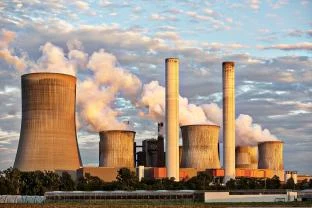
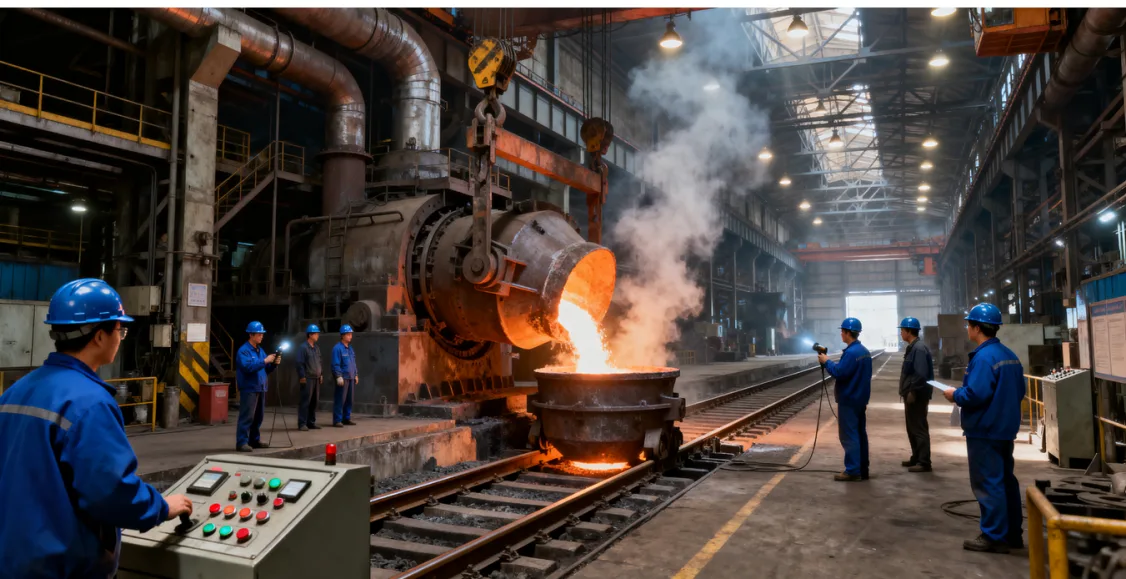
Rapid at-line analysis supports composition monitoring during melting, refining, casting, and rolling. The iSpecLIBS-HH-C measures key elements such as C, Si, Mn, P, and S, providing chemical feedback to help optimize alloy additions, maintain product consistency, and improve steelmaking quality control.
Explore the handheld LIBS analyzer range or contact LiSen Optics to discuss carbon steel analysis, grade libraries, and inspection workflows.