
Nitrogen and phosphorus are essential nutrients for citrus crops, and their levels directly shape the course of plant growth and development. Nitrogen is the “foundation of life”: it drives vegetative growth and photosynthetic capacity, influencing tree vigor and leaf function. Phosphorus is the “energy core”: it supports cell division, root establishment, and reproductive development, affecting flower quality, fruit yield, and ripening quality.
Obtaining accurate, real-time measurements of nitrogen and phosphorus in citrus leaves supports rational fertilization while helping to reduce surface-water and groundwater pollution caused by excessive fertilizer application.
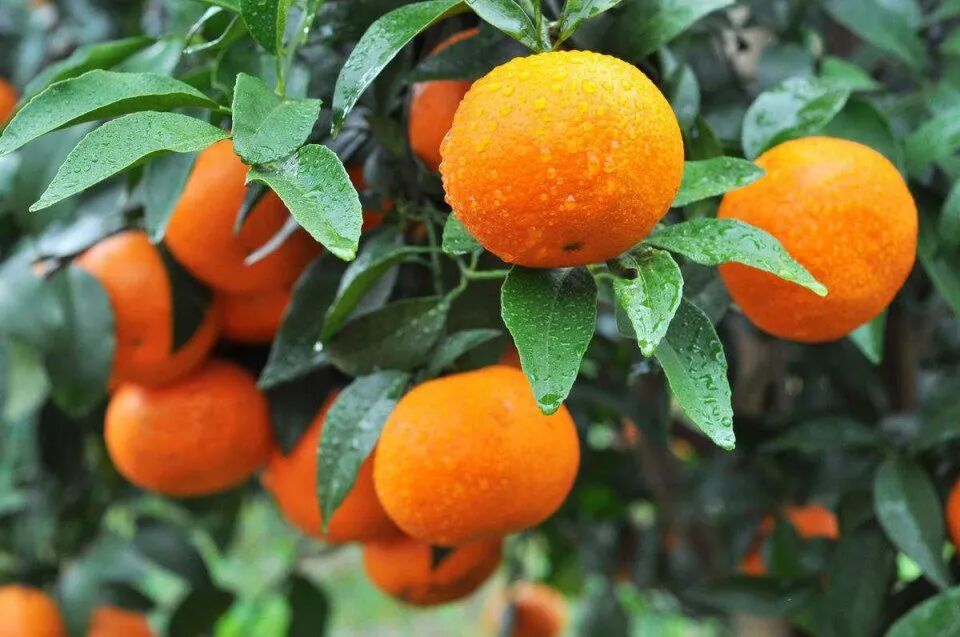
A balanced supply of nitrogen and phosphorus is also essential for aligning tree vigor, abundant flowering, high fruit quality, and high yields. That balance ultimately delivers both economic and ecological gains. Scientific diagnosis of nutrient status and precise control of nitrogen and phosphorus inputs have therefore become core techniques in modern, high-quality, high-yield citrus production.
Why Traditional Testing Falls Short
Conventional nitrogen and phosphorus testing relies mainly on Kjeldahl nitrogen determination and molybdenum blue colorimetry. These chemical methods are costly, time-consuming, labor-intensive, and slow, making them difficult to use for the management needs of modern, large-scale orchards.
As demand grows for precision agriculture and digital management, hyperspectral technology offers a practical alternative. It captures high-resolution information across numerous spectral bands and rapidly reveals a sample’s internal structure and external characteristics without damaging it. Combined with precise algorithms, it is enabling a new generation of intelligent citrus-nutrition monitoring systems.
A Hyperspectral Imaging System for Intelligent Citrus Nutrition Monitoring
To meet the needs of intelligent citrus-nutrition monitoring, LiSen Optics developed an integrated solution built around “rapid detection + precise analysis.” The solution covers key applications including nitrogen and phosphorus measurement and broader nutrient-system monitoring in citrus crops.
Objective
Using a LiSen Optics iSpecHyper-VS series hyperspectral imaging camera, the project designed a hyperspectral system for measuring nitrogen and phosphorus content in citrus leaves.
iSpecHyper-VS Hyperspectral Imaging Camera
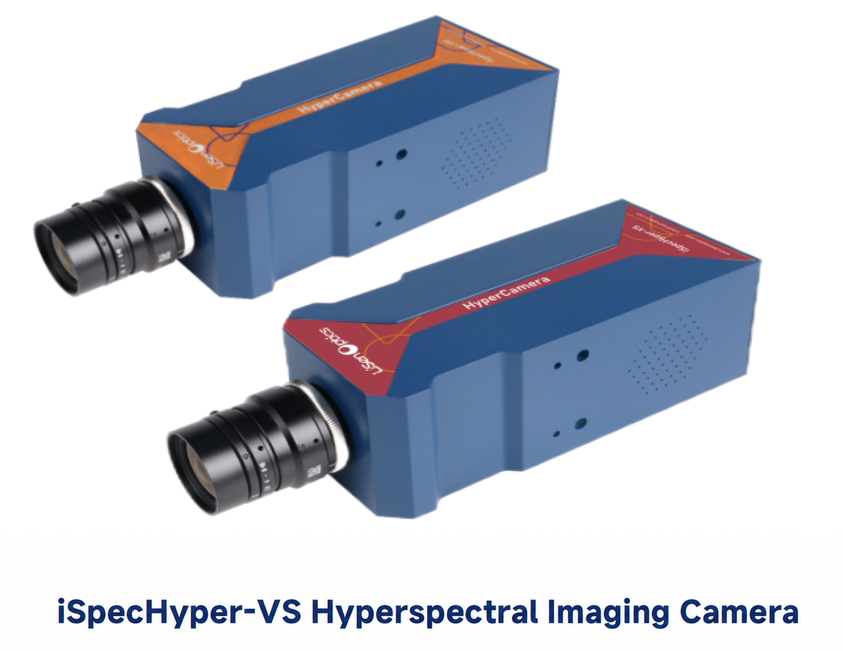
The LiSen Optics iSpecHyper-VS hyperspectral imaging camera operates over 400-1000 nm. In citrus nitrogen diagnosis, hyperspectral imaging covers a broad spectral range, including ultraviolet (200-400 mm), visible light (400-760 mm), near-infrared (760-2560 nm), and infrared (>2560 mm) regions.
- High spectral resolution, with accuracy reaching 2-3 nm.
- A high-performance, TE-cooled InGaAs image sensor; support for the ENVI data format and multiple ROIs.
- Optional motorized autofocus, automatic exposure, and automatic image-scan matching.
- A full-field, high-image-quality optical design with a spot diagram diameter of less than 0.5 pixel.
- Interchangeable 12.5 mm, 25 mm, 35 mm, and 75 mm focal-length objective lenses to suit user requirements.
Method
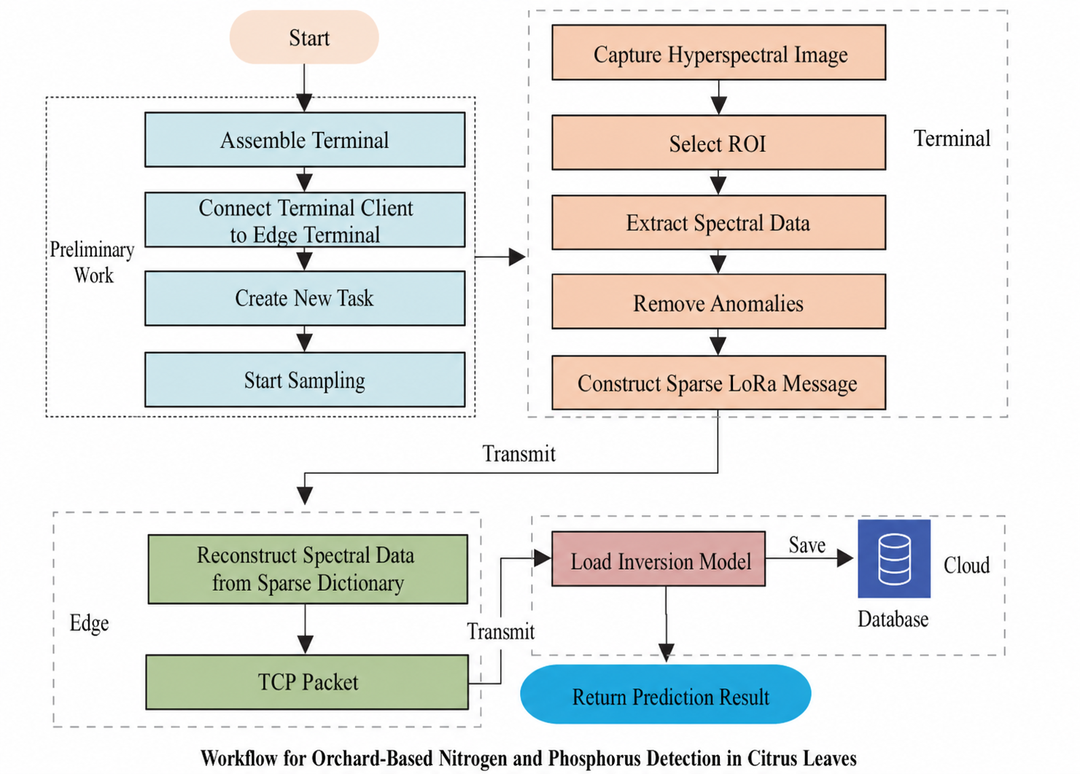
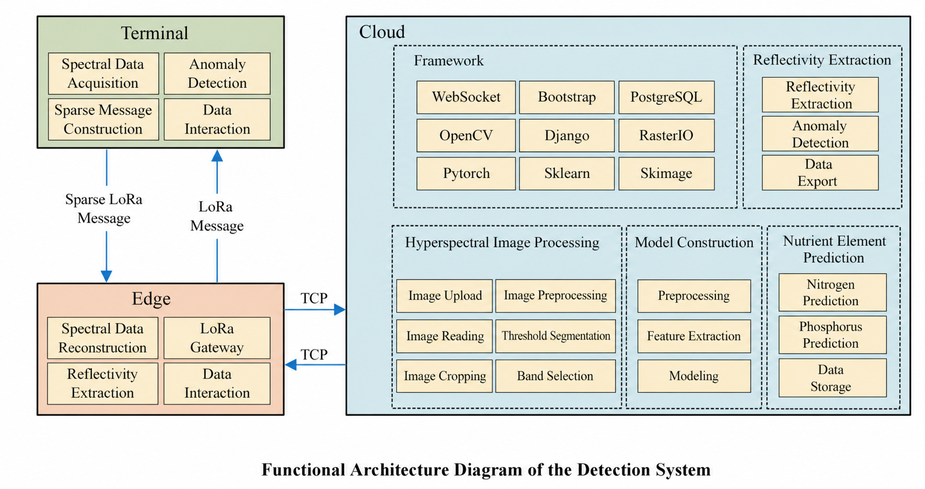
An SR-GRU network was trained to build an inversion model for nitrogen and phosphorus content using citrus-leaf spectral data and measured leaf nitrogen and phosphorus levels. The citrus-leaf detection system was designed around a cloud-edge-terminal architecture.
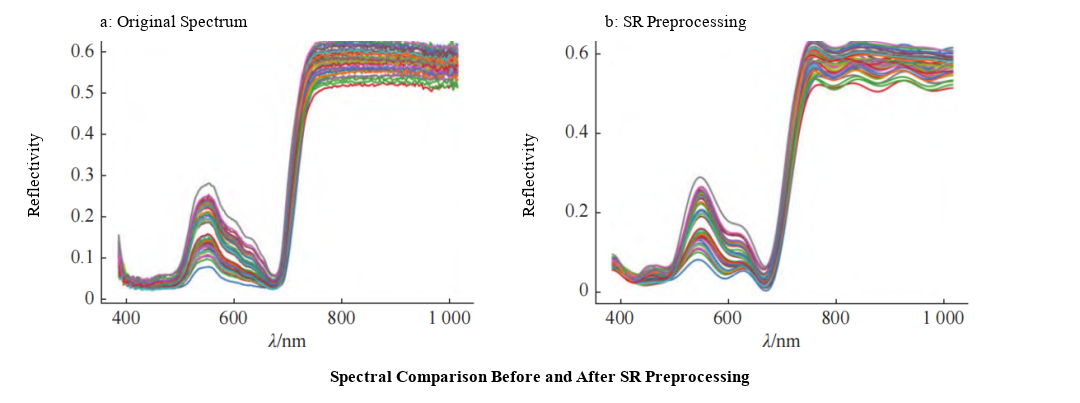
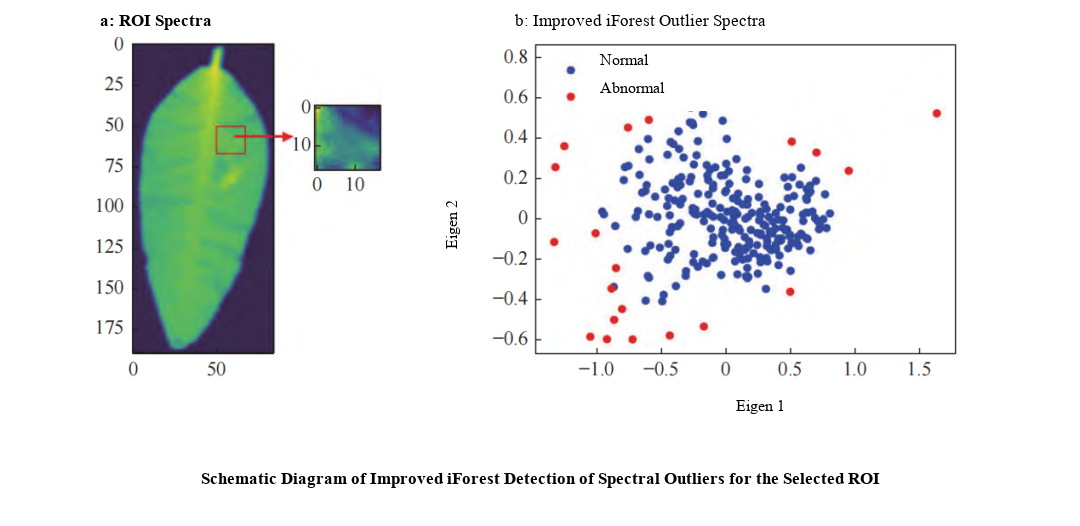
To remove anomalous spectra caused by interference from outdoor light, an improved iForest-SAM algorithm was introduced. To address the slow transmission of high-volume spectral data with many bands, the system uses sparse LoRa messages based on an overcomplete learned dictionary for rapid data transfer. In the orchard, the edge terminal acts as the LoRa gateway. The mobile terminal sends sparse LoRa messages through the edge terminal to the cloud, where the inversion model is loaded to make predictions.
Results
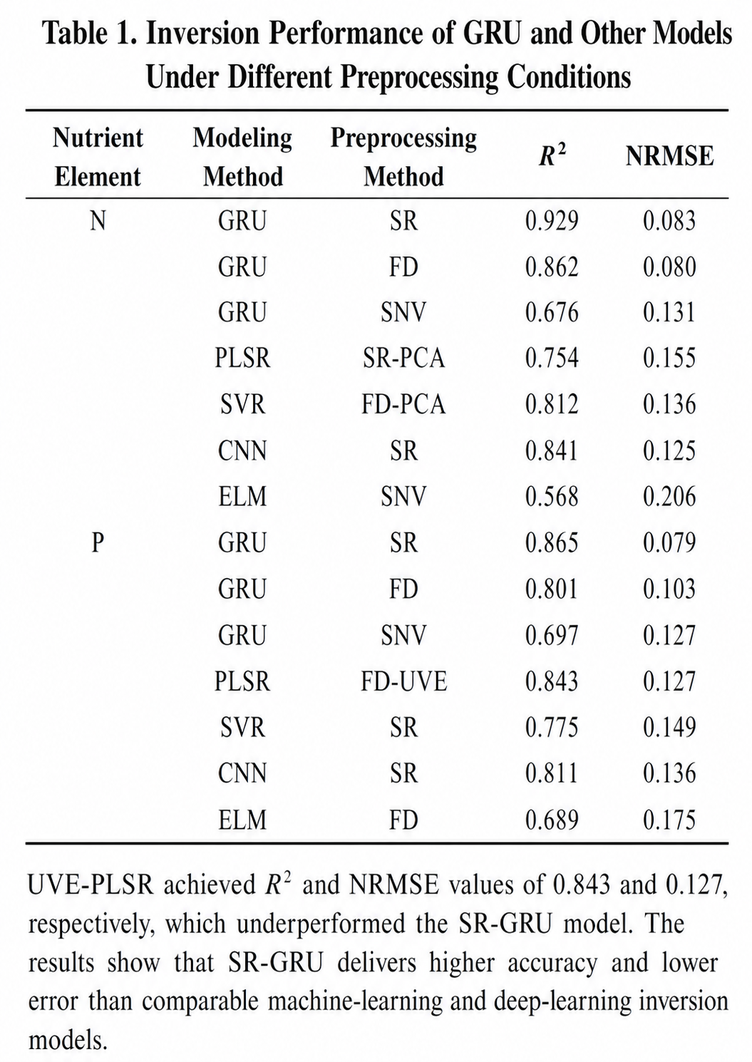
The SR-GRU inversion model produced the best estimates of nitrogen and phosphorus content in citrus leaves. The coefficients of determination were 0.929 and 0.865, respectively, while the normalized root mean square errors were 0.083 and 0.079. Each nitrogen and phosphorus measurement took less than 1 s. LoRa node connections were stable, the web application ran reliably over the internet, and average page load time was under 0.5 s.
Conclusion
The system meets the practical requirement for timely measurement of nitrogen and phosphorus content in citrus leaves.
Nondestructive, Real-Time Hyperspectral Sensing for Precision Citrus Management
In practical applications, hyperspectral remote sensing enables nondestructive outdoor testing without sample preparation. It greatly simplifies analytical work, requires no biochemical reagents, conserves laboratory resources, and addresses limitations of conventional crop-nutrient testing. It can also generate large data volumes for database development. Together, these capabilities provide an important theoretical foundation for real-time, convenient, large-scale precision nutrient management across citrus orchards.
With spectral technology at its core, LiSen Optics uses advanced hyperspectral imaging to monitor crops and collect data, creating a dedicated spectral record for every citrus orchard. Combined with advanced algorithms and agronomic models, these records support variable-rate prescriptions for fertilization and irrigation, early forecasts of yield and quality, and intelligent decisions on harvest timing. Managers can track the condition of vast orchards without leaving the office; the sweetness, color, and size of every citrus fruit can be backed by data while it is still on the tree.
Source note: Some content in this article is adapted from the paper A Hyperspectral Detection System for Nitrogen and Phosphorus Content in Citrus Leaves Based on a Cloud-Edge-Terminal Architecture, by Gao Changlun, Zhang Fangren, Tang Ting, Wu Weibin, Duan Yuxin, Luo Qing, Lin Huarui, and Gao Ting. If this material infringes any rights, please contact us and we will remove it.