
Overview
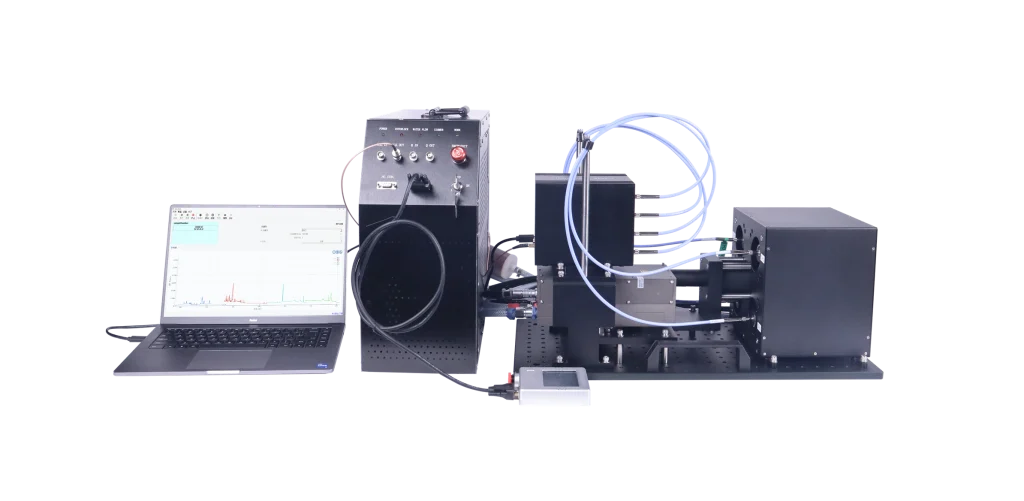
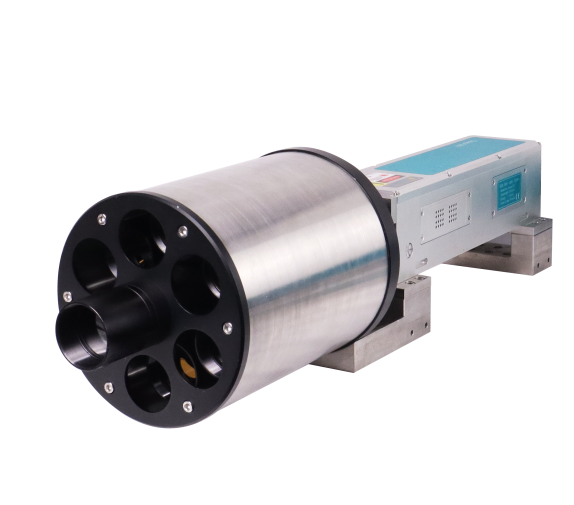
The iSpecLIBS-FF Stand-Off LIBS Elemental Analyzer performs rapid elemental analysis without contacting the target. High-energy laser pulses generate a plasma at a remote focal point, and the system measures the emitted spectrum to identify elemental composition.
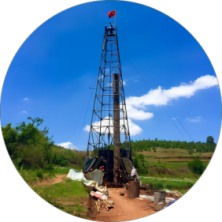
The system supports solids, liquids, and gases and can measure nearly all metallic elements plus selected application-specific elements. Its stand-off geometry is intended for field inspection, production-line monitoring, hazardous locations, and targets that are fragile or difficult to reach.
LIBS Working Principle
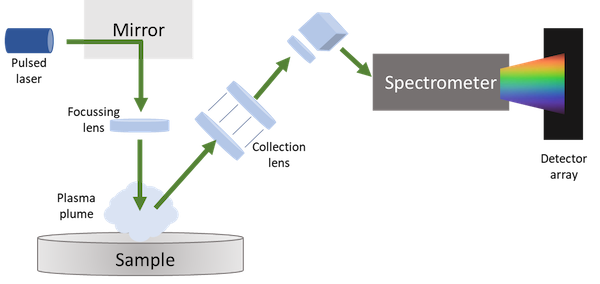
Focusing optics direct the laser pulse onto a distant sample. The pulse forms a short-lived, high-temperature plasma whose emission lines contain the elemental signature. Collection optics transmit that light to the spectrometer and detector for analysis.
Typical Applications


Key Features
- Non-contact analysis: Measures elemental composition without touching or damaging the sample.
- Stand-off operation: Examines hazardous or inaccessible targets from an optional working distance of 1,000-5,000 mm.
- Rapid results: Provides qualitative and semi-quantitative elemental information in less than one second.
- Multi-element detection: Measures several elements in a single acquisition.
- Configurable optics: Supports two- to eight-channel spectrometers and several Nd:YAG laser wavelengths.
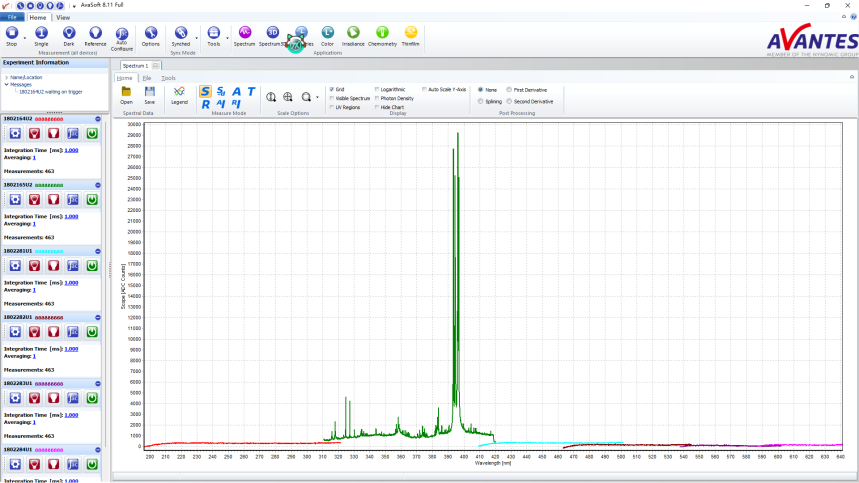
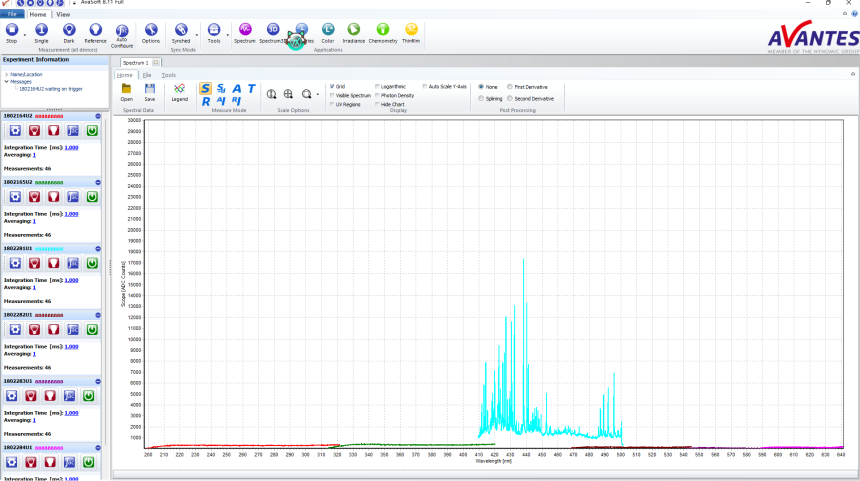
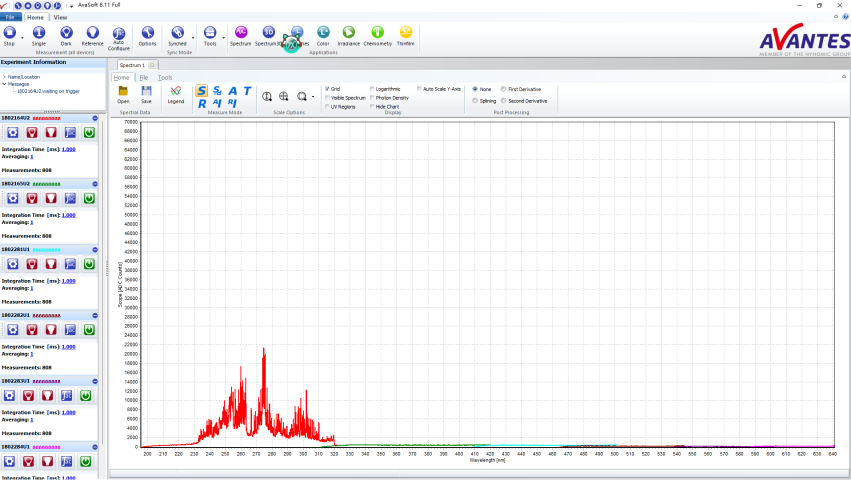
Remote Spectral Results
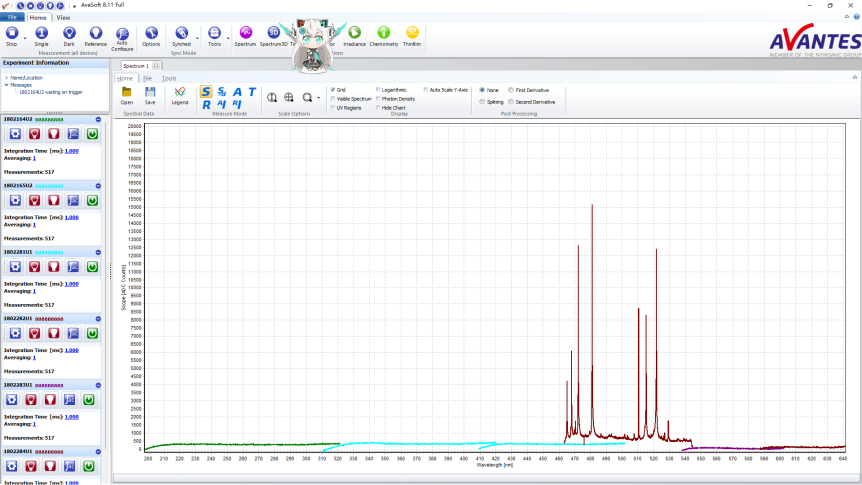
The spectrometer can be configured with two, three, four, six, or eight channels. The available configurations cover 180-528 nm through 180-1045 nm, with channel-specific resolution selected for the required application.
Parameter
Technical Specifications
| Parameter | iSpecLIBS-FF |
|---|---|
| Product Image |
 |
| Elemental Coverage | Nearly all metallic elements, plus selected application-specific elements |
| Concentration Range | Percentage-level concentrations, depending on the element and instrument configuration |
| Analysis Time | Less than 1 s |
| Analysis Mode | Qualitative and semi-quantitative analysis |
| Spectrometer | Two-channel spectrometer: 180-528 nm; resolution: 0.10-0.18 nm; Channel 1: 180-370 nm; resolution: 0.10-0.18 nm; Channel 2: 367-528 nm; resolution: 0.10-0.18 nm; Three-channel spectrometer: 180-683 nm; resolution: 0.10-0.20 nm; Channel 1: 180-370 nm; resolution: 0.10-0.18 nm; Channel 2: 367-528 nm; resolution: 0.10-0.18 nm; Channel 3: 525-683 nm; resolution: 0.10-0.20 nm; Four-channel spectrometer: 180-810 nm; resolution: 0.10-0.22 nm; Channel 1: 180-370 nm; resolution: 0.10-0.18 nm; Channel 2: 367-528 nm; resolution: 0.10-0.18 nm; Channel 3: 525-683 nm; resolution: 0.10-0.20 nm; Channel 4: 680-810 nm; resolution: 0.15-0.22 nm; Six-channel spectrometer: 180-962 nm; resolution: 0.10-0.32 nm; Channel 1: 180-315 nm; resolution: 0.10-0.15 nm; Channel 2: 310-424 nm; resolution: 0.10-0.15 nm; Channel 3: 420-512 nm; resolution: 0.10-0.15 nm; Channel 4: 505-638 nm; resolution: 0.15-0.20 nm; Channel 5: 633-770 nm; resolution: 0.20-0.25 nm; Channel 6: 765-962 nm; resolution: 0.25-0.32 nm; Eight-channel spectrometer: 180-1045 nm; resolution: 0.10-0.32 nm; Channel 1: 180-260 nm; resolution: 0.08-0.10 nm; Channel 2: 255-322 nm; resolution: 0.08-0.10 nm; Channel 3: 320-432 nm; resolution: 0.10-0.15 nm; Channel 4: 430-520 nm; resolution: 0.10-0.15 nm; Channel 5: 515-646 nm; resolution: 0.15-0.20 nm; Channel 6: 640-743 nm; resolution: 0.15-0.20 nm; Channel 7: 735-856 nm; resolution: 0.20-0.25 nm; Channel 8: 859-1045 nm; resolution: 0.25-0.32 nm |
| Laser | Nd:YAG; 266 nm, 10-65 mJ/pulse; 355 nm, 20-150 mJ/pulse; 532 nm, 50-350 mJ/pulse; 1064 nm, 100-650 mJ/pulse; Repetition rate: 1-20 Hz; pulse width: less than 10 ns; integrated water cooling; Note: Energy values indicate the maximum available ranges across different laser models, not the adjustable range of a single laser. |
| Sample Stage and Positioning | Integrated rangefinder |
| Sample Types | Metals and alloys, minerals, rocks, ceramics, semiconductor materials, fossil fuels, soils, and other solid composite materials. Powder samples, including metal powders, mineral powders, pharmaceutical powders, and environmental dust, can be analyzed after pelletizing. The system is suitable for materials science, geology, and environmental research and requires no complex sample preparation. |
| Laser Spot Size | Focused spot diameter: less than 3 mm |
| Standard Working Distance | 1,000-5,000 mm (optional) |
| Beam Orientation | Horizontal output |
| Measurement Mode | Measurement at the focal point |
| Safety | Safe and reliable, with no ionizing-radiation hazard. Equipped with an integrated laser emergency-stop switch. |
| Operating Temperature | 5-35 °C |